
Some links in this guide are affiliate links. We earn a small commission at no extra cost to you when you book through them, which helps fund this publication.
QUICK ANSWERS
Is Singapore safe for Black travelers?
Singapore is one of the safest cities in the world. The US State Department rates it Level 1, Exercise Normal Precautions. Crime is very low and you can walk almost anywhere at night. The real risk is the law: penalties are strict, and drug trafficking can carry the death penalty.
Is there racism in Singapore toward Black people?
Singapore is officially multiracial — Chinese, Malay, Indian and “Others” — and a new Maintenance of Racial Harmony Act took effect in September 2026. Most Black visitors find it orderly and welcoming. Bias still shows up: staring, strangers touching your hair, blackface incidents that make the news, and rental listings that state a race preference. Many Black residents still call it one of the easiest places in Asia to live.
What is the best time to visit Singapore?
Singapore is hot all year, about 31–33°C by day. February is the driest month, and November to January are the wettest. Haze from fires in Indonesia can drift in between June and September, so check the air quality before you go.
Do Black Americans need a visa for Singapore?
No. US passport holders can stay up to 90 days without a visa. Submit the free SG Arrival Card on the official ica.gov.sg site within 3 days before you land, and ignore third-party sites that charge a fee. Your passport needs 6 months’ validity beyond your departure date.
Are there Black communities in Singapore?
Small, but real. African and Black professionals work in finance, tech and academia. Kafe Utu, an African cafe in the Chinatown and Tanjong Pagar area, is a known gathering spot. Networks are smaller than in Tokyo or Seoul, so expect to find them once you arrive.
AREA GUIDES
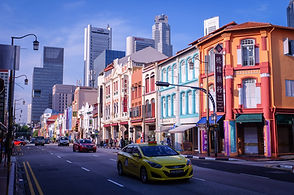
Singapore is a city-state, so instead of cities, here are the four areas most visitors base themselves in.


PRACTICAL ESSENTIALS
Singapore is one of the easiest countries in Asia to arrive in. The main thing to prepare for is the rules.
GETTING THERE
Singapore Airlines flies nonstop from New York JFK, Newark, Los Angeles, San Francisco and Seattle — about 15 hours from the West Coast and around 19 from New York. From Changi Airport (SIN), the MRT reaches the city in 30–35 minutes for about S$2. A taxi costs about S$20–45.
WHERE TO STAY
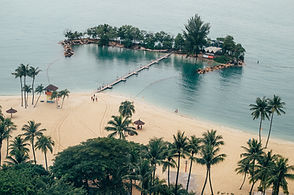
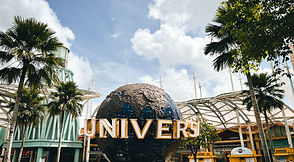
Marina Bay is the priciest and most iconic. Chinatown and Tanjong Pagar are central, with good mid-range hotels. Little India and Kampong Glam are the best value. Sentosa suits families heading to Universal Studios.
GETTING AROUND
The MRT and buses take contactless Visa, Mastercard and Amex cards, plus Apple Pay and Google Pay, so you don’t need a transport card. Foreign cards pay a S$0.60 daily admin fee. Grab works for rides. Everything is signed in English.
MONEY MATTERS
The currency is the Singapore dollar (S$). In October 2026, $1 USD is about S$1.28. Cards work almost everywhere; carry some cash for hawker stalls. Restaurant bills usually add a 10% service charge plus 9% GST, so tipping is not expected.
WHAT TO PACK
Light, breathable clothes and an umbrella — it rains often and hard. Singapore uses Type G plugs (230V), so bring an adapter. Leave vapes and e-cigarettes at home: they are illegal. Chewing gum can’t be sold or imported.
CULTURAL CONSIDERATIONS FOR BLACK TRAVELLERS
Singapore is one of the smoothest trips in Asia for Black travelers. A few things are worth knowing in advance.
Curiosity and staring. Singapore is used to foreigners, but the Black community is small. Expect some stares and the occasional question about your hair, or a hand reaching for it. You can say no.
The harder side. Blackface still turns up at company parties and school events, and makes the news when it does. Some rental listings openly state a race preference. A new racial harmony law took effect in September 2026. Most short visits are trouble-free; this matters more if you move here.
The law is strict. Drug tests can happen on arrival, and drug trafficking can carry the death penalty. Vapes are illegal: fines start at S$700 and go up to S$10,000 under a 2026 law, and repeat offenders can be banned from re-entering. There is no eating or drinking on the MRT (fines up to S$500), no littering and no jaywalking. Carry your passport.
Food considerations. Hawker culture is on UNESCO’s heritage list, and it is the best way to eat: cheap, fast and excellent, with Michelin-listed stalls. Halal food is everywhere, especially in Kampong Glam and Little India. Return your tray when you finish — it’s the law. Tissue packets on a table mean the seat is taken (locals call this “chope”).
Hair and beauty access. Black hair care is limited. Extreme Lengths does braids, weaves and Afro hair, but options are few, so bring your own products and book ahead.

TOP EXPERIENCES
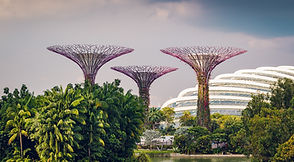
The experiences below are the big ones most first-time visitors put on the list in Singapore. Each is bookable through Klook, the leading tour platform in Asia.



LIVING IN SINGAPORE AS A BLACK EXPAT
Singapore’s Black expat community is small and professional: finance, tech, academia and international organizations. Most people come on an Employment Pass, which needs a job offer, a minimum salary of S$5,600 a month (S$6,200 in finance) — rising with age, and rising again for new applications from January 2027 — and enough points under the COMPASS framework. Top earners can apply for the ONE Pass. Rent is the big cost: a one-bedroom apartment runs about S$4,200 a month.
LATEST ASIA STORIES
Trip reports, visa updates and guides from across Asia.


