
Some links in this guide are affiliate links. We earn a small commission at no extra cost to you when you book through them, which helps fund this publication.
QUICK ANSWERS
Is Vietnam safe for Black travelers?
Yes, Vietnam is generally safe for Black travelers. Violent crime against tourists is rare. The main concerns are petty theft from motorbikes in big cities, and chaotic traffic. Most Black visitors report warm, curious receptions, especially outside the major tourist hubs where Black foreigners are less common.
Is there racism in Vietnam toward Black people?
Vietnam is mostly curious rather than hostile toward Black travelers. In Ho Chi Minh City and Hanoi, locals are used to foreigners. In smaller towns you may experience staring, pointing, or photo requests, which is usually genuine curiosity. Some Black travelers note occasional higher price quotes, but overt racism is uncommon.
What is the best time to visit Vietnam as a Black traveler?
Vietnam is long with three distinct climate regions, so timing depends on where you go. Generally spring (February to April) and fall (August to October) offer the best weather countrywide. The north is best in fall, the center is driest February to May, and the south is warm year-round with a dry season December to April.
Do Black Americans need a visa for Vietnam?
Most US passport holders need a visa for Vietnam. As of 2026 the easiest route is the e-visa, which allows stays up to 90 days and can be applied for online before arrival. Always apply through the official government e-visa portal to avoid third-party scam sites.
Every entry rule for Vietnam and 17 other destinations, checked September 2026, is in our Black Abroad 2026 travel guide ($14.99).
Are there Black expat communities in Vietnam?
Yes, Vietnam has growing Black expat communities, especially in Ho Chi Minh City and Da Nang. Many arrive as English teachers, remote workers, and entrepreneurs drawn by the low cost of living. Facebook groups like Black In Vietnam host meetups. Da Nang in particular has become popular with Black digital nomads for its beaches and affordability.
CITY GUIDES
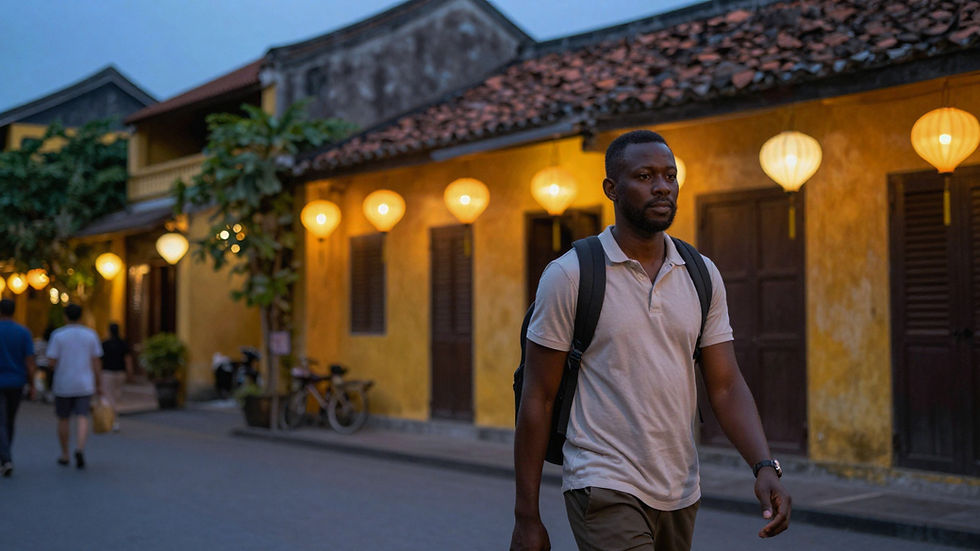
Vietnam stretches over 1,000 miles north to south, and each city has its own character. Ho Chi Minh City is the fast-moving southern metropolis. Hanoi is the historic capital in the north. Da Nang offers beaches and a growing nomad scene. Hoi An is the lantern-lit cultural gem.

.jpeg)
.png)
.jpeg)
PRACTICAL ESSENTIALS
Vietnam is welcoming to Black travelers, but a few cultural realities are worth knowing before you go so the small moments do not catch you off guard.
GETTING THERE
Vietnam’s main international gateways are Tan Son Nhat Airport (SGN) in Ho Chi Minh City and Noi Bai Airport (HAN) in Hanoi. Da Nang (DAD) also has international flights. There are limited direct flights from the US — most travelers connect through Seoul, Tokyo, Taipei, or Doha. Round-trip economy typically runs $900 to $1,600 depending on season and routing.
WHERE TO STAY
In Ho Chi Minh City, District 1 is central and convenient. In Hanoi, the Old Quarter and Hoan Kiem area are best for first-timers. Da Nang’s beachfront has modern hotels and apartments. Hoi An offers charming boutique stays. Vietnam is excellent value — quality hotels cost far less than in the West. Use Klook or Booking for the best inventory.
GETTING AROUND
Grab (the app) is the easiest way to get around Vietnamese cities — both car and motorbike taxi options. Motorbikes rule the roads; crossing the street takes practice (walk slowly and steadily, don’t stop suddenly). For intercity travel, domestic flights are cheap and fast, and the reunification railway and sleeper buses connect major cities. Renting a motorbike is popular but only if you’re experienced.
MONEY MATTERS
The Vietnamese dong (₫) is the currency. As of June 2026, $1 USD = approximately ₫25,000, so you’ll be dealing in large numbers. ATMs are widely available; withdraw larger amounts to reduce per-transaction fees. Cash is king for street food, markets, and small shops, while cards work at hotels and nicer restaurants. Tipping is not traditional but is increasingly appreciated in tourist areas.
WHAT TO PACK
Pack light, breathable clothing for the heat and humidity, plus a layer for the cooler north in winter. Bring a rain jacket — Vietnam gets significant rainfall. Comfortable walking shoes and sandals are essential. Bring your own Black hair products, as they’re hard to find locally. Vietnam uses Type A, C, and F plugs, so a universal adapter is useful. Mosquito repellent is recommended.
CULTURAL CONSIDERATIONS FOR BLACK TRAVELLERS
Vietnam is a rewarding and affordable destination for Black travelers, with incredible food, history, and landscapes. A few cultural notes will help you navigate the country smoothly.
Curiosity, especially outside the cities. In Ho Chi Minh City, Hanoi, and Da Nang, locals are used to international visitors. In smaller towns, rural areas, and the north, Black travelers can draw significant attention — staring, pointing, and photo requests are common. This is almost always curiosity rather than hostility; for some locals you may be the first Black person they’ve encountered in person. A smile and a wave usually turns the moment friendly.
Bargaining and pricing. Vietnam has a strong bargaining culture in markets and with taxis and street vendors. Foreigners — including Black travelers — are sometimes quoted higher “tourist prices.” This isn’t personal; it happens to all foreigners. Use Grab (fixed pricing) to avoid taxi haggling, agree on prices before buying at markets, and bargain with a smile. Knowing rough local prices ahead of time helps.
Hair and beauty access. Black hair products are difficult to find in Vietnam. Bring your own supply. A limited selection can be ordered through Vietnamese e-commerce sites like Shopee and Lazada, but availability is inconsistent. Braiders and natural hair stylists who serve the expat community exist in Ho Chi Minh City and Da Nang — check local Black expat Facebook groups for current recommendations before you go.
Food. Vietnamese cuisine is among the best and healthiest in the world — pho, banh mi, fresh spring rolls, and endless regional specialties, much of it very affordable. Street food is a highlight, though ease into it and drink bottled or filtered water. Vegetarian options are widely available (look for “chay” restaurants, often linked to Buddhist tradition). If you have allergies, learn the key Vietnamese words and carry a translation card, as fish sauce and shrimp paste are common.
Etiquette and respect. Vietnamese culture values politeness and modesty. Dress respectfully at temples and pagodas (cover shoulders and knees). Remove your shoes when entering homes and some temples. Avoid public displays of anger — staying calm and patient is respected. Learn a few words of Vietnamese (cam on means thank you); locals genuinely appreciate the effort. Be mindful and respectful when visiting war history sites, which carry deep significance.
.jpeg)
TOP EXPERIENCES
The experiences below are the ones Black travelers consistently rate as worth the cost in Vietnam. Each is bookable through Klook, the leading tour platform in Asia.
.jpeg)
.jpeg)
.jpeg)
.jpeg)
.jpeg)
.jpeg)

LIVING IN VIETNAM AS A BLACK EXPAT
Vietnam has become a top destination for Black expats drawn by an extremely low cost of living, growing economy, and welcoming pace of life. Ho Chi Minh City and Da Nang are the main hubs. Many Black expats arrive through English teaching (which pays well relative to local costs), remote work, or entrepreneurship. A comfortable lifestyle is possible on $1,000-2,000/month. The e-visa and various longer-stay options make setup manageable, and Black expat communities run active meetups and support networks, especially in Da Nang’s nomad scene.
LATEST VIETNAM STORIES
Vietnam has become a top destination for Black expats


