
Some links in this guide are affiliate links. We earn a small commission at no extra cost to you when you book through them, which helps fund this publication.
QUICK ANSWERS
Is the Philippines safe for Black travelers?
Yes, the Philippines is generally safe and famously friendly for Black travelers. Filipinos are known for warm hospitality and most Black visitors report very welcoming receptions. The main concerns are petty theft in crowded areas of Manila and typhoons during the wet season. Stick to well-traveled areas and stay aware in big cities.
Is there racism in the Philippines toward Black people?
The Philippines is one of the more welcoming Asian countries for Black travelers. English is widely spoken, the culture is heavily influenced by Western and American media, and Filipinos are generally warm and curious. You may encounter colorism (a local preference for lighter skin) and occasional curiosity in rural areas, but overt racism toward Black visitors is uncommon.
What is the best time to visit the Philippines as a Black traveler?
The dry season (November to April) is the best time — sunny weather ideal for island hopping. The peak is December to February with the most pleasant temperatures. The wet season (June to October) brings typhoons and heavy rain but fewer crowds and lower prices. Avoid July through September for beach trips.
Do Black Americans need a visa for the Philippines?
US passport holders can enter the Philippines visa-free for up to 30 days as tourists as of 2026, and this can be extended in-country. For longer stays, extensions can be processed at the Bureau of Immigration, and the SRRV retiree visa is available. The Philippines is relatively easy for Americans to enter and extend.
Every entry rule for the Philippines and 17 other destinations, checked September 2026, is in our Black Abroad 2026 travel guide ($14.99).
Are there Black expat communities in the Philippines?
Yes, the Philippines has established Black expat communities, particularly in Manila, Cebu, and Angeles City, plus growing numbers of digital nomads. Many are drawn by the low cost of living, widespread English, and friendly culture. Facebook groups like Black in the Philippines host meetups and share resources for relocating.
CITY GUIDES
The Philippines is over 7,000 islands, so each destination offers something distinct. Manila is the dense, energetic capital. Cebu blends city life with island access. Palawan is the postcard paradise of lagoons and cliffs. Boracay is the famous white-sand beach island.
.jpeg)
.jpeg)
.jpeg)
.jpeg)
PRACTICAL ESSENTIALS
The Philippines is welcoming to Black travelers, but a few cultural realities are worth knowing before you go so the small moments do not catch you off guard.
GETTING THERE
The main gateway is Ninoy Aquino International Airport (MNL) in Manila. Cebu (CEB) is a second major hub. There are some direct flights from the US West Coast (Los Angeles, San Francisco) to Manila; from elsewhere you’ll connect through Tokyo, Seoul, Taipei, or Hong Kong. Round-trip economy typically runs $900 to $1,700. Inter-island flights on local carriers are cheap and essential for reaching the islands.
WHERE TO STAY
In Manila, Makati and Bonifacio Global City (BGC) are the safest, most modern areas. Cebu City is convenient for island access. In Palawan, base in El Nido or Coron. In Boracay, Station 1 and 2 are the prime beach areas. The Philippines offers everything from budget hostels to luxury resorts at great value. Use Klook or Booking for the widest inventory.
GETTING AROUND
Grab (the app) works in Manila and Cebu and is the safest way to get around cities. Jeepneys and tricycles are the colorful local transport for short hops. For island travel, you’ll use bangka boats, vans, and cheap domestic flights. Manila traffic is notoriously heavy, so allow plenty of time. On the islands, tricycles and rented scooters are the norm.
MONEY MATTERS
The Philippine peso (₱) is the currency. As of June 2026, $1 USD = approximately ₱57. ATMs are common in cities and tourist areas but can be scarce on remote islands, so carry enough cash before heading to places like El Nido. Cards are accepted at hotels and malls but cash rules for local eateries, tricycles, and markets. Tipping is appreciated — around 10% at restaurants.
WHAT TO PACK
Lightweight tropical clothing, swimwear, reef-safe sunscreen, and a rain jacket (especially in wet season). Water shoes are useful for rocky beaches and island hopping. Bring your own Black hair products — they’re hard to find locally, though some are available in Manila malls and via online stores like Lazada and Shopee. The Philippines uses Type A, B, and C plugs. Bring cash in small bills for the islands.
CULTURAL CONSIDERATIONS FOR BLACK TRAVELLERS
The Philippines is one of the warmest and easiest destinations in Asia for Black travelers, helped by widespread English and a famously hospitable culture. A few notes will help you make the most of it.
Genuine hospitality. Filipinos are consistently rated among the friendliest people in the world, and most Black travelers feel it immediately. The culture is heavily influenced by American media, English is an official language, and people are generally curious and welcoming. In rural provinces you may get friendly staring or “hello!” greetings from children — it’s warm, not hostile. The shared language makes connecting far easier than in much of Asia.
Colorism, not racism. The Philippines has a strong cultural preference for lighter skin, visible in the whitening products lining pharmacy shelves. This is rooted in local and colonial history and is directed inward at Filipinos as much as anything. It rarely translates into hostility toward Black visitors, but you’ll notice the beauty standard. Some Black travelers find it jarring; understand it as a local cultural dynamic rather than a comment on you.
Hair and beauty access. Black hair products are limited in the Philippines. Bring your own supply. Manila malls and online marketplaces (Lazada, Shopee) carry a small selection of curl creams and similar products, but options are inconsistent and pricier than at home. Braiders serving the expat community can be found in Manila and Angeles City — check local Black expat Facebook groups for current recommendations before you travel.
Food. Filipino food is hearty and distinct — adobo, sinigang, lechon, and lots of rice and seafood. It leans savory and sometimes sweet, with less spice than neighboring countries. Street food and local eateries (carinderias) are cheap and worth trying. Fresh fruit and seafood on the islands are excellent. As always, drink bottled or filtered water and ease into street food.
Etiquette and warmth. Filipinos value respect, family, and a friendly demeanor. A smile goes a long way. Use “po” and “opo” as polite markers if you pick up a little Tagalog — locals love the effort. The Philippines is predominantly Catholic, so churches and religious festivals are central to community life; dress modestly when visiting churches. Filipinos are generous hosts — if invited to share food, accepting graciously is appreciated.
.jpeg)
TOP EXPERIENCES
The experiences below are the ones Black travelers consistently rate as worth the cost in the Philippines. Each is bookable through Klook, the leading tour platform in Asia.
.jpeg)
.jpeg)
.jpeg)
.jpeg)
.jpeg)
.jpeg)
AUTHENTIC FILIPINO COOKING CLASS
A hands-on class cooking Filipino classics like adobo and sinigang, with a market visit included.
LIVING IN THE PHILIPPINES AS A BLACK EXPAT
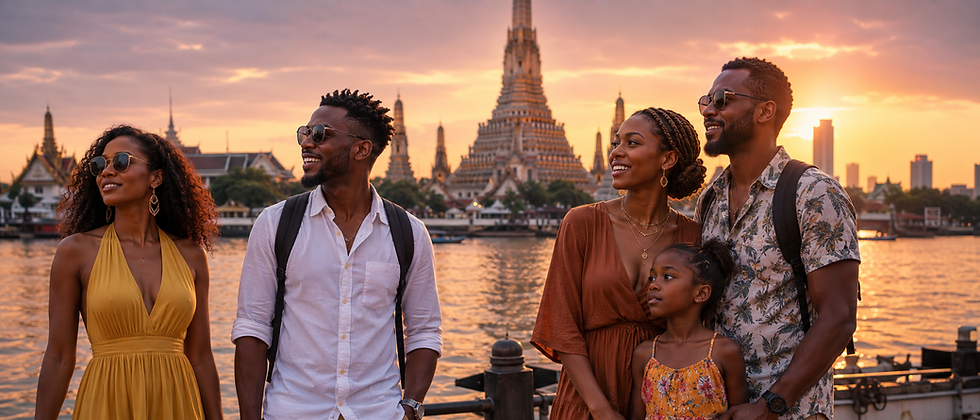
The Philippines is a popular base for Black expats and retirees, helped by widespread English, a very low cost of living, and a famously friendly culture. Manila, Cebu, and Angeles City are the main hubs. A comfortable lifestyle is possible on $1,000-2,000/month. The visa situation is flexible — easy 30-day visa-free entry with straightforward extensions, plus the SRRV retiree visa for those looking to settle long-term. Black expat and retiree communities are active, with Facebook groups and regular meetups making it easy to connect and get settled.
LATEST PHILIPPINES STORIES
Philippines has become a top destination for Black expats


