
Some links in this guide are affiliate links. We earn a small commission at no extra cost to you when you book through them, which helps fund this publication.
QUICK ANSWERS
Is Malaysia safe for Black travelers?
Malaysia is generally safe for visitors. The US State Department rates it Level 1, Exercise Normal Precautions, with one exception: the islands and coast of eastern Sabah, on Borneo, are Level 2 because of kidnapping risk. For Black travelers, the day-to-day challenge is attention, not danger.
Is there racism in Malaysia toward Black people?
Most Black visitors describe friendly locals and a curious, welcoming trip. The harder side is documented: rental ads saying “No African,” complaints of airport profiling from African diplomats, and immigration raids that have caught African students. Colorism exists too. Tourists rarely meet the worst of it, but it matters if you plan to live here.
What is the best time to visit Malaysia?
It depends on the coast. The east coast and its islands get heavy rain from November to March, and some boats stop running. The west coast — Kuala Lumpur, Penang, Langkawi and Melaka — is more sheltered, but expect storms. Haze from fires can hit during dry spells between May and September. During Ramadan (around 8 February to 9 March 2027) restaurants stay open, but eat discreetly.
Do Black Americans need a visa for Malaysia?
No. US passport holders can stay up to 90 days visa-free. Submit the free Malaysia Digital Arrival Card (MDAC) within 3 days before you arrive, and only on the official imigresen-online.imi.gov.my site — fake sites have charged up to $80. Your passport needs 6 months’ validity.
Are there Black communities in Malaysia?
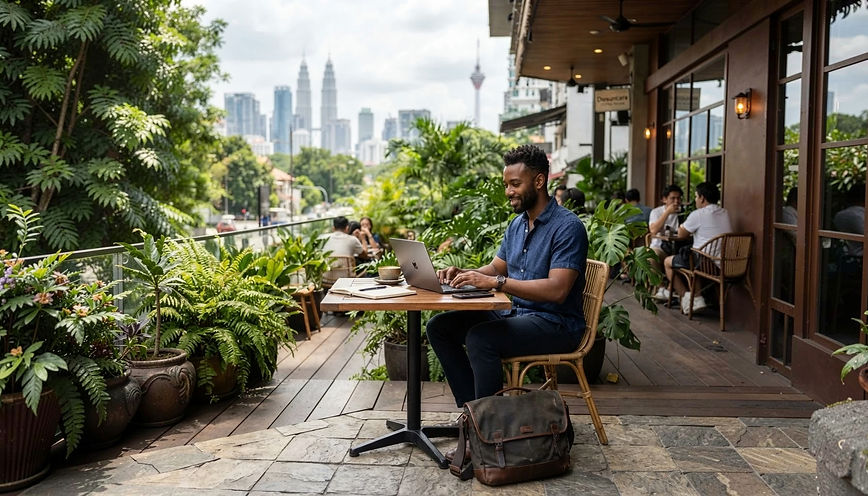
Yes, though smaller than in Bangkok or Tokyo. Kuala Lumpur has African students and professionals, plus a growing number of Black American expats and digital nomads drawn by the low cost of living. Penang has a quieter expat scene. Expect to find people through social media and once you arrive.
CITY GUIDES
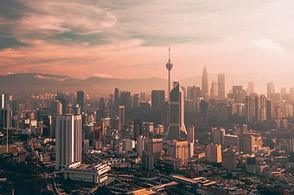
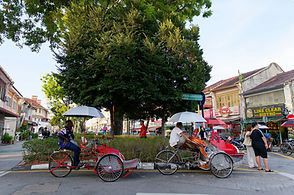
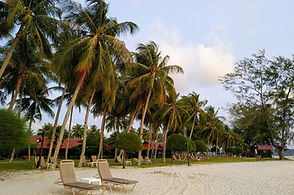
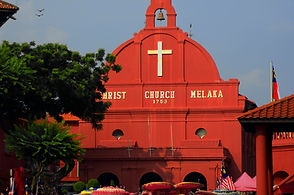
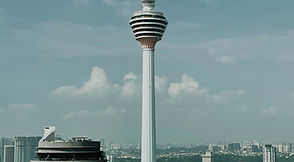
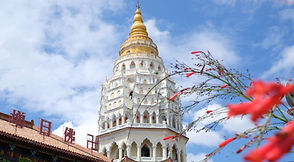
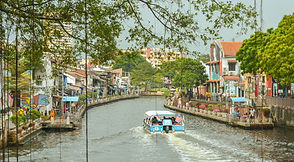
Malaysia’s main stops are very different trips. Kuala Lumpur is the skyline capital. Penang is the food island, with UNESCO-listed George Town. Langkawi is the beach island. Melaka is the heritage city two hours from KL.
PRACTICAL ESSENTIALS
Malaysia is easy and good value. Fill in your arrival card, download Grab, and you are set.
GETTING THERE
There are no nonstop flights from the US, so most travelers connect through a hub in Asia or the Middle East to Kuala Lumpur International Airport (KLIA). The KLIA Ekspres train reaches KL Sentral in 28 minutes for RM55 (rising to RM65 in January 2027).
WHERE TO STAY
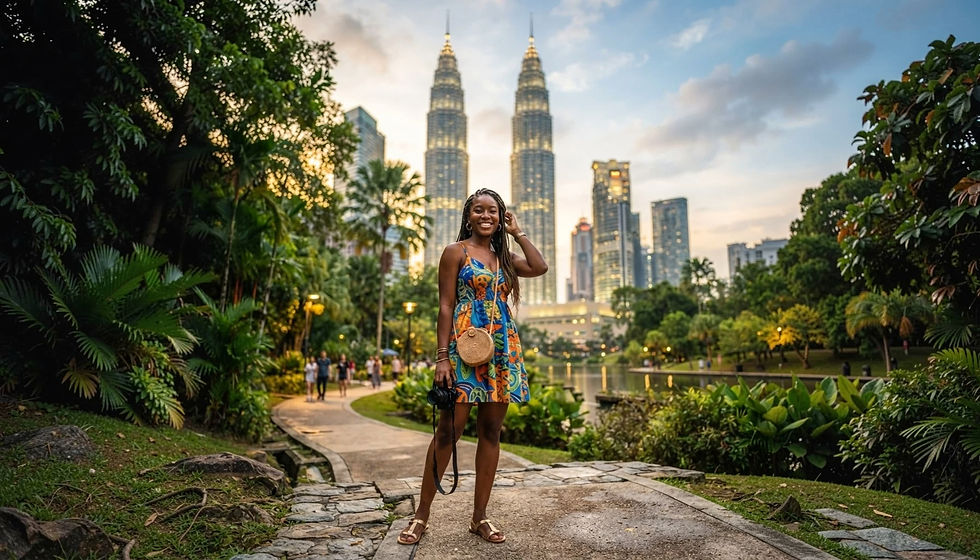
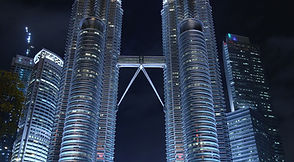
In Kuala Lumpur, KLCC is close to the Petronas Towers, Bukit Bintang is the shopping and food hub, Bangsar is quieter and popular with expats, and Chinatown is the budget pick. In Penang, stay in George Town.
GETTING AROUND
Grab is the essential app for rides and food. In KL, the LRT, MRT and Monorail are cheap — get a Touch ’n Go card at a 7-Eleven or a station. Domestic flights to Penang and Langkawi are short.
MONEY MATTERS
The currency is the ringgit (RM). In October 2026, $1 USD is about RM4.07. Cards are widely accepted; carry cash for street food. Tipping is not expected; many restaurants add a service charge and 6% service tax. Hotels add a RM10-per-night tourism tax for foreigners.
WHAT TO PACK
Light clothing, rain gear, and at least one outfit that covers your shoulders and knees for mosques and temples. Malaysia uses Type G plugs (240V). Bring your own hair products.
CULTURAL CONSIDERATIONS FOR BLACK TRAVELLERS
Malaysia can be one of the best-value, most welcoming trips in Asia for Black travelers. A few things are worth knowing ahead of time.
Curiosity and staring. Malaysia is a mix of Malay, Chinese, Indian and Indigenous communities, and Black travelers still stand out. Expect curiosity, some stares — especially if you wear locs or braids — and photo requests outside KL. Most of it is friendly.
The harder side. Malaysia has no law against racial discrimination. Some landlords have refused African tenants, African diplomats have complained of airport profiling, and immigration raids in KL have detained African students. Colorism is real, and some Black visitors report a cooler welcome outside the big cities. Most short trips are trouble-free.
Respect the faith and the law. Malaysia is a Muslim-majority country. Dress modestly at mosques; at the National Mosque, robes are provided, shoes come off, and non-Muslims can’t enter at prayer times. Drug laws are severe, and that includes CBD and marijuana, even if prescribed at home.
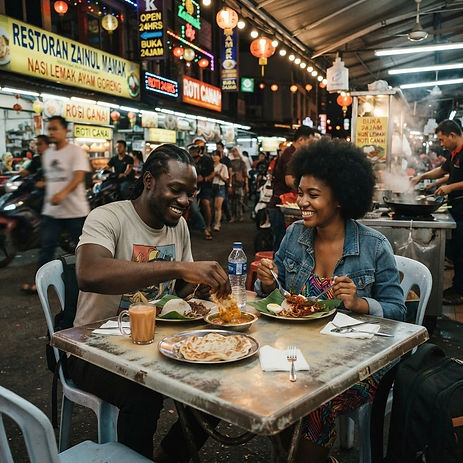
Food considerations. Malaysia is one of the easiest countries in Asia for halal food — most Malay and Indian restaurants are halal. Try nasi lemak, roti canai and the late-night mamak (Indian-Muslim) stalls. Chinese restaurants may serve pork, so ask if it matters to you.
Hair and beauty access. Black hair care is limited. A few KL barbershops, such as Ace Studio in Kampung Baru, do cornrows and box braids, but they are not specialist salons. Bring your own products.
TOP EXPERIENCES
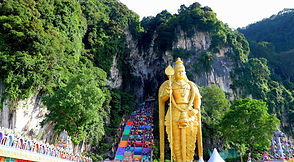
The experiences below are the big ones most first-time visitors put on the list in Malaysia. Each is bookable through Klook, the leading tour platform in Asia.

LIVING IN MALAYSIA AS A BLACK EXPAT
Kuala Lumpur is one of the best-value big cities in Asia: a one-bedroom near the center runs about $500–750 a month. Remote workers can apply for the DE Rantau Nomad Pass, which needs an income of US$24,000 a year in a tech role or US$60,000 in other roles; it lasts 3–12 months and is renewable up to 24 months. The MM2H long-stay program has Silver, Gold and Platinum tiers, starting from a US$150,000 deposit. The biggest challenges are renting as a Black foreigner and finding hair care.
LATEST ASIA STORIES
Trip reports, visa updates and guides from across Asia.


